

Pilonidal Sinus: Causes, Symptoms & Treatment Options
A painful lump near the tailbone is easy to ignore because of where it is. One common cause is a pilonidal sinus. It is a well-understood condition, and there are several pilonidal sinus treatment options depending on how severe it is.
What Is a Pilonidal Sinus?
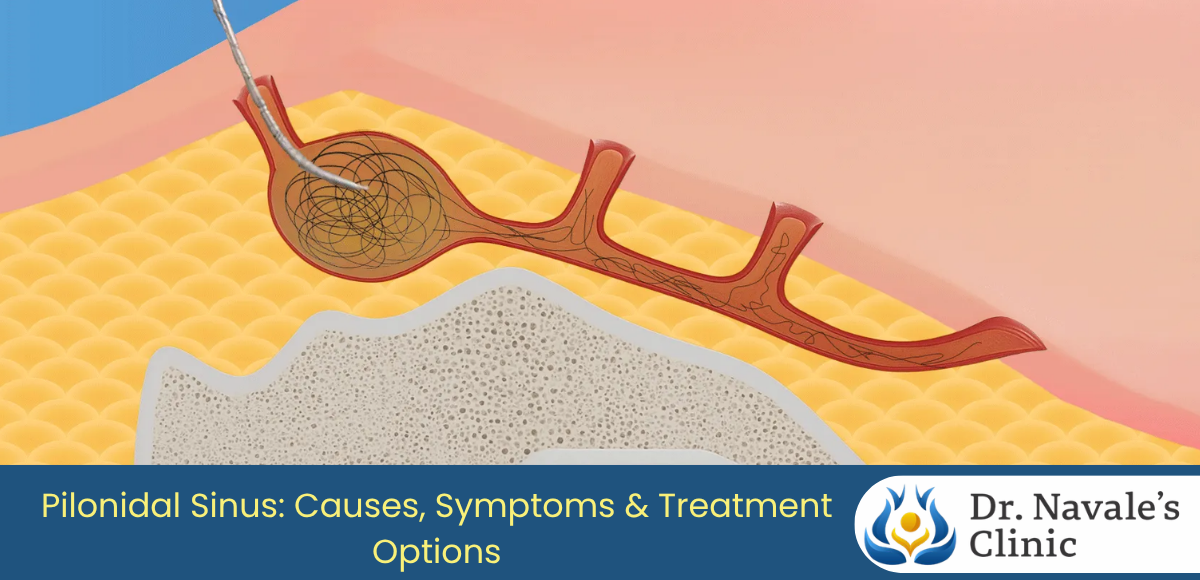
A pilonidal sinus is a small tunnel or pit in the skin at the top of the buttock crease, just above the tailbone. The word “pilonidal” means “nest of hair”, because these tunnels often contain loose hair, dead skin and debris.
When loose hair is pushed into the skin, the body treats it as a foreign object, causing inflammation and sometimes infection. An infected pocket of pus is called a pilonidal abscess. Repeated infections can leave a long-lasting tract under the skin, called a chronic pilonidal sinus.
It is not related to piles, and it is not a sexually transmitted infection. It is also different from an anal fistula, which opens near the anus rather than above the tailbone. To learn how a fistula usually shows up, read our guide on fistula symptoms, causes and treatment.
Causes and Risk Factors of Pilonidal Sinus
Most pilonidal sinuses are linked to hair and friction rather than something you are born with. Common risk factors include:
- Sitting for long hours, such as office work, driving or long two-wheeler rides
- Thick or coarse body hair around the lower back and buttocks
- A deep buttock crease (natal cleft), where sweat and hair collect easily
- Excess body weight, which increases friction and sweating
- Sweating and tight clothing that rubs against the area
- Family history of pilonidal disease
It is seen more often in young adult men, but women can get it too. Having a risk factor does not mean you will develop it, but it is a reason to watch for early symptoms.
Common Symptoms of Pilonidal Sinus
Some people have a small pit for years without trouble. Symptoms usually start when the area gets infected. Watch for:
- Pain or tenderness at the top of the buttock crease, often worse when sitting
- A swelling or lump near the tailbone
- Redness and warmth of the skin around it
- Discharge of pus or blood from one or more small openings
- A bad smell from the draining fluid
- Fever or feeling unwell, if an abscess is forming
For a closer look at early signs, read our article on pilonidal sinus warning signs and when to seek treatment.
When Should You See a Doctor?
See a doctor soon if the lump is growing, the pain is worsening, there is pus or blood, or you have a fever. Do not squeeze the swelling at home, as this can push infection deeper. Also get checked if symptoms keep returning, even if they settle each time.
How Is Pilonidal Sinus Diagnosed?
A doctor can usually diagnose a pilonidal sinus with a simple examination, checking the area for small pits or openings and asking about your symptoms. If a deeper or branching tract is suspected, an ultrasound may sometimes be suggested.
Pilonidal Sinus Treatment Options
The right treatment depends on whether the sinus is infected, how deep it is, and whether it has come back before.
1. Conservative Care for Mild Cases
If there is no active infection, the doctor may first recommend:
- Keeping the area clean and dry
- Regular hair removal around the buttock crease, as advised by your doctor
- Avoiding long periods of sitting
- Medicines if there are signs of infection
2. Draining an Abscess
A painful, swollen abscess usually needs to be drained to release the pus and relieve pressure. This is a small procedure done under local anaesthesia. It eases pain quickly, but the underlying tract often remains, so further treatment may be needed later.
3. Surgery for Chronic or Recurring Sinus
When the sinus keeps coming back, surgeons may remove the tract and surrounding infected tissue. The wound may be left open to heal, closed with stitches, or covered with a nearby skin flap. Some newer methods remove only the pits and tract through smaller cuts. Each method has its own healing time and aftercare.
4. Ayurvedic Kshar Sutra Therapy
Kshar Sutra is a para-surgical Ayurvedic procedure. A thread coated with herbal medicines is placed through the sinus tract. Over time, it helps to cut, clean and drain the tract while the tissue heals. At Dr. Navale’s Clinic, Kshar Sutra is done as an outpatient procedure, along with herbal medicines, external applications, and diet and lifestyle advice. Whether it is suitable for you depends on your examination.
Recovery and Prevention Tips
Healing time varies with the size of the sinus, the treatment used, and aftercare. These habits support healing and may lower the chance of it returning:
- Keep the area clean and dry, especially after bathing and on hot, sweaty days
- Remove hair in the area regularly if your doctor advises it
- Take breaks from sitting every 30 to 45 minutes if you have a desk job
- Wear loose, breathable cotton clothing
- Maintain a healthy weight through diet and activity
- Follow dressing and follow-up advice carefully
Frequently Asked Questions About Pilonidal Sinus
Can a pilonidal sinus go away on its own?
Usually not completely. Symptoms may settle for a while, but the tract under the skin often stays and can get infected again.
Is pilonidal sinus dangerous?
It is not usually dangerous, but an untreated infection can be painful and keep returning. See a doctor promptly if you have fever, spreading redness or severe pain.
Does every pilonidal sinus need surgery?
No. Mild cases without infection may be managed with hygiene and hair removal. Abscesses usually need drainage, and recurring or chronic sinuses may need surgery or Kshar Sutra therapy.
Can a pilonidal sinus come back after treatment?
Yes, it can recur in some people, whichever treatment is used. Good hygiene, hair removal and regular sitting breaks may help lower that chance.
Who is more likely to get a pilonidal sinus?
It is more common in young adult men, people with thick body hair, people who sit for long hours and those who are overweight. Women can also develop it.
Can women consult a female doctor for pilonidal sinus?
Yes. At Dr. Navale’s Clinic, women can consult Dr. Ranjana Navale, a female doctor who treats anorectal conditions including pilonidal sinus.
Consult Dr. Navale’s Clinic for Pilonidal Sinus Care
If you have pain, swelling or discharge near your tailbone, an early examination can help you understand your options before it gets worse. At Dr. Navale’s Clinic in Chinchwad, Dr. Kaushik Navale (BAMS) and Dr. Ranjana Navale (BAMS) assess and treat piles, fissure, fistula and pilonidal sinus.
- Address: Flat No. 201, 2nd Floor, Sampada House, near Manakarnika Medical Store, Chapekar Chowk, behind Bhaji Mandai, Chinchwad, Pimpri-Chinchwad, Maharashtra 411033
- Phone: +91 98221 16364
- Email: doctornavale@gmail.com
- Timings: Monday to Saturday, 10 AM to 1:30 PM and 6 PM to 9 PM
Call +91 98221 16364 or book an appointment to get your pilonidal sinus checked.