

- June 23, 2026
- Dr. Navale's Clinic
Pilonidal Sinus: Early Warning Signs and When to Seek Treatment
Pilonidal sinus is a common yet often overlooked condition that affects the skin near the tailbone, typically at the top of the buttock crease. Although it may begin as a minor skin issue, ignoring the symptoms can lead to severe pain, infection, and recurring abscesses. Recognizing the early warning signs of pilonidal sinus and seeking timely treatment can prevent complications and improve your quality of life.
What Is a Pilonidal Sinus?
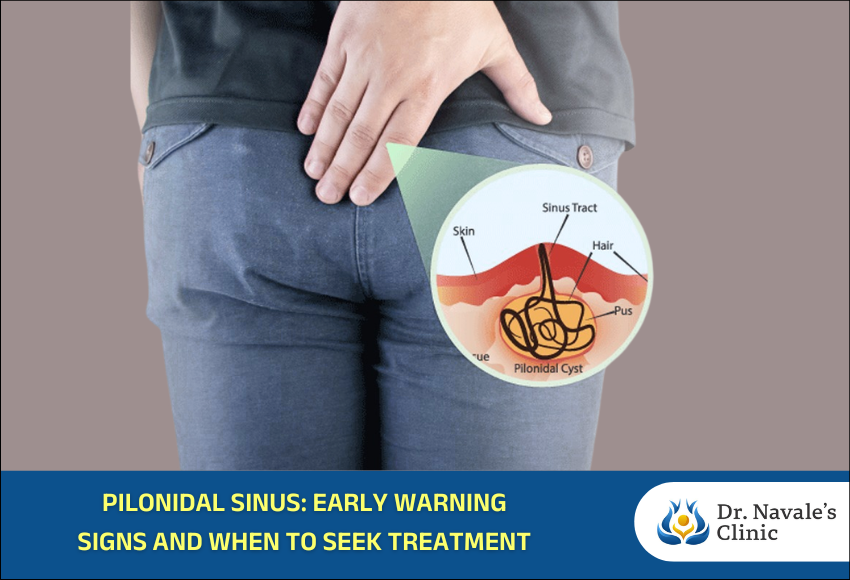
A pilonidal sinus is a small tunnel or cavity that forms beneath the skin, usually near the tailbone (coccyx). It often contains hair, debris, and dead skin cells. The condition is more common in young adults, especially men, and can become infected, resulting in a painful abscess.
The term “pilonidal” means “nest of hair,” which reflects one of the primary causes of the condition—ingrown hairs trapped beneath the skin.
What Causes Pilonidal Sinus?
Several factors can increase the risk of developing a pilonidal sinus, including:
- Excessive body hair
- Prolonged sitting
- Obesity
- Poor hygiene
- Repetitive friction or pressure in the tailbone area
- Family history of pilonidal disease
- Deep natal cleft (buttock crease)
When loose hairs penetrate the skin, the body’s immune system treats them as foreign objects, leading to inflammation and infection.
Early Warning Signs of Pilonidal Sinus
Identifying the symptoms early can help prevent the condition from worsening. Here are the most common warning signs:
1. Pain Near the Tailbone
One of the earliest signs is discomfort or tenderness near the top of the buttocks. The pain may initially be mild but can gradually become more severe, especially while sitting.
2. Small Lump or Swelling
You may notice a small bump or swelling in the tailbone area. This lump may feel tender to the touch and can increase in size over time.
3. Redness and Skin Irritation
Inflammation around the affected area often causes redness and irritation. The skin may appear warm and sensitive.
4. Drainage of Pus or Blood
As the sinus becomes infected, it may produce pus, blood, or foul-smelling discharge. This drainage can stain clothing and cause discomfort.
5. Persistent Itching
Some individuals experience itching around the affected area before more severe symptoms develop.
6. Fever and Fatigue
In advanced cases where infection spreads, fever, chills, and fatigue may occur. These symptoms require immediate medical attention.
When Should You Seek Treatment?
Many people ignore the early symptoms of pilonidal sinus, hoping they will disappear on their own. However, delaying treatment can lead to recurring infections and chronic discomfort.
You should seek medical treatment if:
- Pain persists for more than a few days.
- You notice swelling or a lump near the tailbone.
- Pus or blood is draining from the area.
- The affected area becomes increasingly red and painful.
- You develop fever or signs of infection.
- Symptoms repeatedly return after temporary relief.
Early diagnosis and treatment can prevent the need for more extensive procedures later.
Treatment Options for Pilonidal Sinus
Treatment depends on the severity of the condition.
Conservative Management
For mild cases, doctors may recommend:
- Maintaining proper hygiene
- Regular hair removal
- Keeping the area clean and dry
- Antibiotics if infection is present
Abscess Drainage
If an abscess has formed, a minor surgical procedure may be needed to drain the pus and relieve pain.
Surgical Treatment
For recurrent or chronic pilonidal sinus, surgery is often the most effective solution. Modern surgical techniques focus on removing the sinus while minimizing recovery time and reducing recurrence rates.
Benefits of early surgical intervention include:
- Faster recovery
- Reduced risk of recurrence
- Relief from chronic pain
- Improved quality of life
Why Early Treatment Matters
Seeking treatment at the first sign of a pilonidal sinus can make a significant difference. Early intervention often means less pain, fewer complications, and a lower likelihood of recurrence.
Ignoring symptoms may allow the infection to spread and increase the need for more extensive surgical treatment. If you notice any signs of pilonidal sinus, consulting an experienced specialist is the best way to protect your health.
Frequently Asked Questions (FAQs)
1. Can a pilonidal sinus heal on its own?
In some mild cases, symptoms may temporarily improve. However, the underlying sinus often remains and can become infected again. Professional evaluation is recommended.
2. Is pilonidal sinus painful?
Yes. Pain is one of the most common symptoms, especially when sitting, walking, or applying pressure to the area.
3. Who is most at risk of developing pilonidal sinus?
Young adults, men, individuals with excessive body hair, and people who sit for long periods are at higher risk.
4. Does pilonidal sinus always require surgery?
Not always. Early or mild cases may be managed conservatively. However, recurrent or infected pilonidal sinus often requires surgical treatment.
Get Expert Pilonidal Sinus Treatment in Pimpri Chinchwad
If you are experiencing pain, swelling, discharge, or other symptoms of pilonidal sinus, don’t wait for the condition to worsen. Early diagnosis and timely treatment can prevent complications and help you return to a comfortable, healthy life.
Book an Appointment with Dr. Navale
Dr. Navale’s Clinic
Pilonidal Sinus Treatment Specialist in Pimpri Chinchwad