

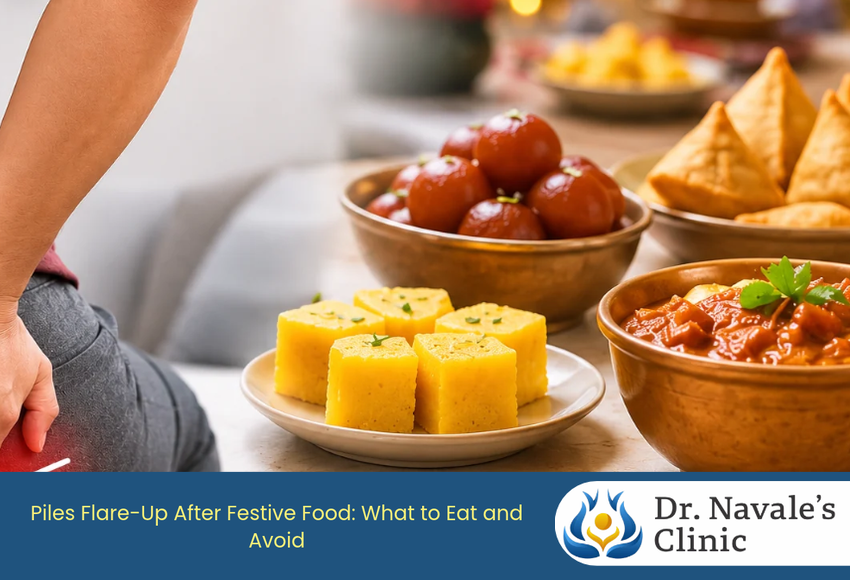
Piles Flare-Up After Festive Food: What to Eat and Avoid
Diwali sweets, fried snacks, rich gravies and late-night family dinners are a part of the festive season. For people who already have piles (hemorrhoids), the days that follow can bring a familiar problem: pain, itching, a lump at the anus or bleeding after passing stool. This guide explains why a piles flare-up after festive food happens, what to eat and avoid, and when a clinic visit is needed.
Why Do Piles Flare Up After Festive Meals?
Piles are swollen blood vessels in and around the anus and lower rectum. Straining, hard stools and long sitting on the toilet put pressure on these vessels. Festive eating often creates exactly these conditions:
- Low fibre intake: sweets, maida-based snacks and fried food contain little fibre, so stools become harder.
- Less water: busy visiting schedules and tea or coffee instead of water can lead to dry stool.
- Heavy, oily and spicy food: this can irritate the gut and, in some people, worsen anal burning or itching after a motion.
- Irregular meal times: late dinners and skipped breakfasts disturb bowel habits.
- Alcohol: it can cause dehydration and loose or irregular stools.
- Long sitting and less activity: travel and gatherings reduce movement, which slows the bowel.
A flare-up does not always mean the piles have become worse. Often it is a temporary reaction to constipation and straining, but it still deserves attention.
Common Symptoms of a Piles Flare-Up
- Bright red blood on the stool, tissue or in the toilet bowl
- Pain or discomfort, especially when sitting or after a bowel movement
- Itching or burning around the anus
- A soft lump or swelling that may be felt at the anal opening
- A feeling that the bowel has not emptied fully
- Mucus discharge or mild soiling
Piles are a common cause of rectal bleeding, but they are not the only cause. Our guide on the danger signs of piles explains which symptoms should not be ignored.
What to Eat During a Piles Flare-Up
The aim is to keep stools soft and easy to pass. Helpful choices include:
igh-fibre foods
- Whole grains such as whole wheat chapati, jowar, bajra, ragi, oats and brown rice
- Pulses and legumes such as moong dal, masoor dal, rajma and chana, if they suit your digestion
- Vegetables such as bottle gourd (lauki), ridge gourd, spinach, carrots, beetroot and pumpkin
- Fruits such as papaya, guava, pear, apple (with skin), orange and banana in moderation
Increase fibre gradually over a few days. A sudden jump can cause gas and bloating. Adults are generally advised to aim for about 25 to 30 grams of fibre a day unless a doctor suggests otherwise.
luids
- Drink water regularly, around 8 to 10 glasses a day, unless you have a heart or kidney condition where fluids are restricted.
- Include buttermilk (chaas), coconut water, clear soups and dal water.
- Keep tea, coffee and fizzy drinks limited.
ut-friendly meals
- Eat smaller, regular meals instead of one heavy dinner.
- Choose home-cooked, lightly spiced dishes such as khichdi, vegetable soups, curd rice or dal with chapati.
- Add a spoon of ghee or oil to meals in a moderate amount. Very little fat can make stools dry, and very high fat can upset digestion.
If you are considering a fibre supplement such as psyllium husk (isabgol), ask your doctor about the dose and timing first.
What to Avoid After Festive Indulgence
- Deep-fried snacks such as chakli, sev, bhajiya, kachori and samosa
- Sugar-heavy sweets and mithai made with refined flour and large amounts of khoa
- Maida-based foods such as white bread, naan, biscuits and bakery items
- Very spicy foods, hot pickles and heavy masala gravies, especially if they cause burning during a motion
- Red meat and processed food, which are low in fibre and slow to digest
- Alcohol, which can dehydrate and irritate the gut
- Late, heavy dinners close to bedtime
You do not have to avoid festive food entirely. Portion size and balance matter more than a strict ban. Pair a sweet with fruit or a fibre-rich meal, and drink water alongside.
simple one-day pattern after festivities
- Morning: a glass of warm water, then oats or vegetable poha with a fruit
- Lunch: chapati or jowar bhakri, dal, a green vegetable and a bowl of salad
- Evening: buttermilk, roasted chana or a seasonal fruit instead of fried snacks
- Dinner: an early, light meal such as khichdi with vegetables
Habits That Help Beyond Diet
- Do not strain or hold your breath while passing stool.
- Do not sit on the toilet for long, and avoid using the phone there.
- Go when the urge comes. Delaying can harden stool.
- Stay active with a daily walk of about 30 minutes.
- Clean gently with water after a motion and pat dry rather than rubbing.
- A warm sitz bath for 10 to 15 minutes may ease discomfort for some people.
- If constipation continues for several days, read our guide on chronic constipation and piles.
When to See a Doctor
Please book a consultation if you notice:
- Bleeding that recurs or lasts more than a few days
- Dark, black or tarry stools, or blood mixed with stool
- Severe pain or a hard, painful lump near the anus
- A change in bowel habits lasting more than two to three weeks
- Unexplained weight loss, tiredness or paleness
- Symptoms that do not settle with diet and home care
Not every case of bleeding is due to piles. A doctor should examine you, particularly if you are over 40 or have a family history of bowel problems. You can read more in our overview of piles symptoms, causes and treatment.
Frequently Asked Questions
an festive food make piles worse?
Yes, for some people. Low-fibre, oily and sugary food can lead to constipation and straining, which may trigger a flare-up.
s it safe to eat sweets if I have piles?
Occasional small portions are usually manageable. Combine them with fibre, water and regular meals, and avoid overeating.
hich fruits are good during a flare-up?
Papaya, guava, pear, apple and orange are commonly suggested for their fibre and water content. Choose what suits your digestion.
oes drinking more water stop piles?
Water helps keep stool soft, but it does not treat piles by itself. Fibre, activity and regular bowel habits matter too.
hould I take a laxative after a heavy festive meal?
Do not use laxatives regularly without medical advice. Fibre, fluids and a short routine reset are usually the first step, and a doctor can advise if you need medicine.
Consult Dr. Navale’s Clinic in Chinchwad
If symptoms continue after a festive week, an examination helps find the cause and plan care. At Dr. Navale’s Clinic, Dr. Kaushik Navale (Bachelor of Ayurvedic Medicine and Surgery, with over 14 years of experience) and Dr. Ranjana Navale see patients with piles, fissure, fistula and related complaints.
- Address: Flat No. 201, 2nd Floor, Sampada House, near Manakarnika Medical Store, Chapekar Chowk, behind Bhaji Mandai, Chinchwad, Pimpri-Chinchwad, Maharashtra 411033
- Phone: +91 98221 16364
- Timings: Monday to Saturday, 10 AM to 1:30 PM and 6 PM to 9 PM
Call +91 98221 16364 or book an appointment to get your symptoms checked.